Public Benefit Lab
Communities are facing a wave of "heavy infrastructure" proposals, from battery storage to data centers, that often outpace local zoning laws. This toolkit shares records of specific technical mitigations and public benefit "asks" based on successful precedents from other communities.
For the examples below, advocating for safety or compensation measures did not mean endorsing a project. These are are standard industry practices that ensure projects, should they go through, still pay their fair share and protect local resources.
In the past it has been critical for communities to advocate for these measures during the permitting process (rather than waiting until after a decision) as many can be made a condition of the permit by the agencies responsible for approval.
Check out the list of projects and their mitigations below. Then see what process has worked for other communities at the bottom of this page.
Data centers/crypto mining
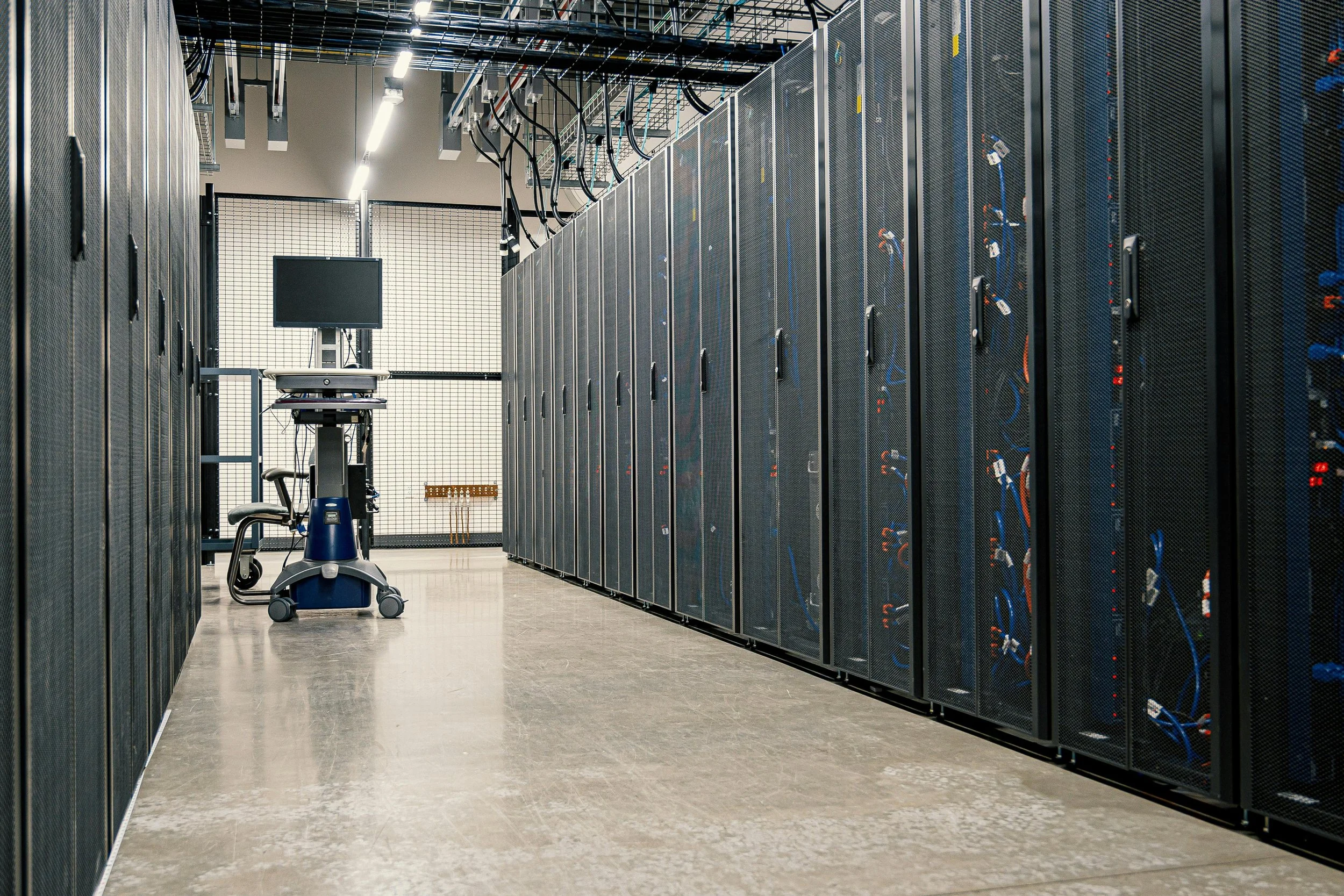
Data centers are large-scale, 24/7 facilities housing servers and network equipment that power the internet, cloud computing, and AI. Often called "digital warehouses," these facilities are rapidly expanding, driving massive demand for electricity and water.
Similarly, crypto mining centers are industrial-scale facilities housing thousands of powerful computers that process blockchain transactions. While they are often described as "data centers," their constant 24/7 operation and extreme energy requirements can create significant daily impacts for nearby residents.
The Concerns: local environmental impacts, energy grid strain, and high consumption of natural resources.
Mitigations
-
Cooling fans create a low hum that travels miles. Set decibel limits specifically for "low-frequency" noise, measured at the property line (not the nearest house).
Model Precedent: Chandler, AZ (Ordinance No. 5033) specifically regulates data center noise and bans "pure tone" hums.
-
Ban "once-through" cooling systems that drain aquifers. Mandate air cooling or closed-loop recycling systems.
Model Precedent: Mesa, AZ (Ordinance 5957) limits data center water use; companies like Microsoft are now committing to "water positive" operations by 2030.
-
Petition for a "Large Load Tariff." The data center pays for its own substation and grid upgrades upfront, ensuring residential rates don't spike to subsidize their infrastructure.
Model Precedent: Grant County PUD, WA (Rate Schedule 17) protects residents from crypto-mining driven rate hikes.
Public benefit options
-
If the project pulls a fiber trunk to the site, require a "meet-me room" where local ISPs can tap into that high-speed connection at wholesale rates to serve the community.
Fiber optic also increasingly has applications in wildfire and landslide detection, and seismic monitoring.
-
Infrastructure to pipe waste heat into district heating systems for nearby greenhouses or public buildings.
Battery energy storage systems (BESS)
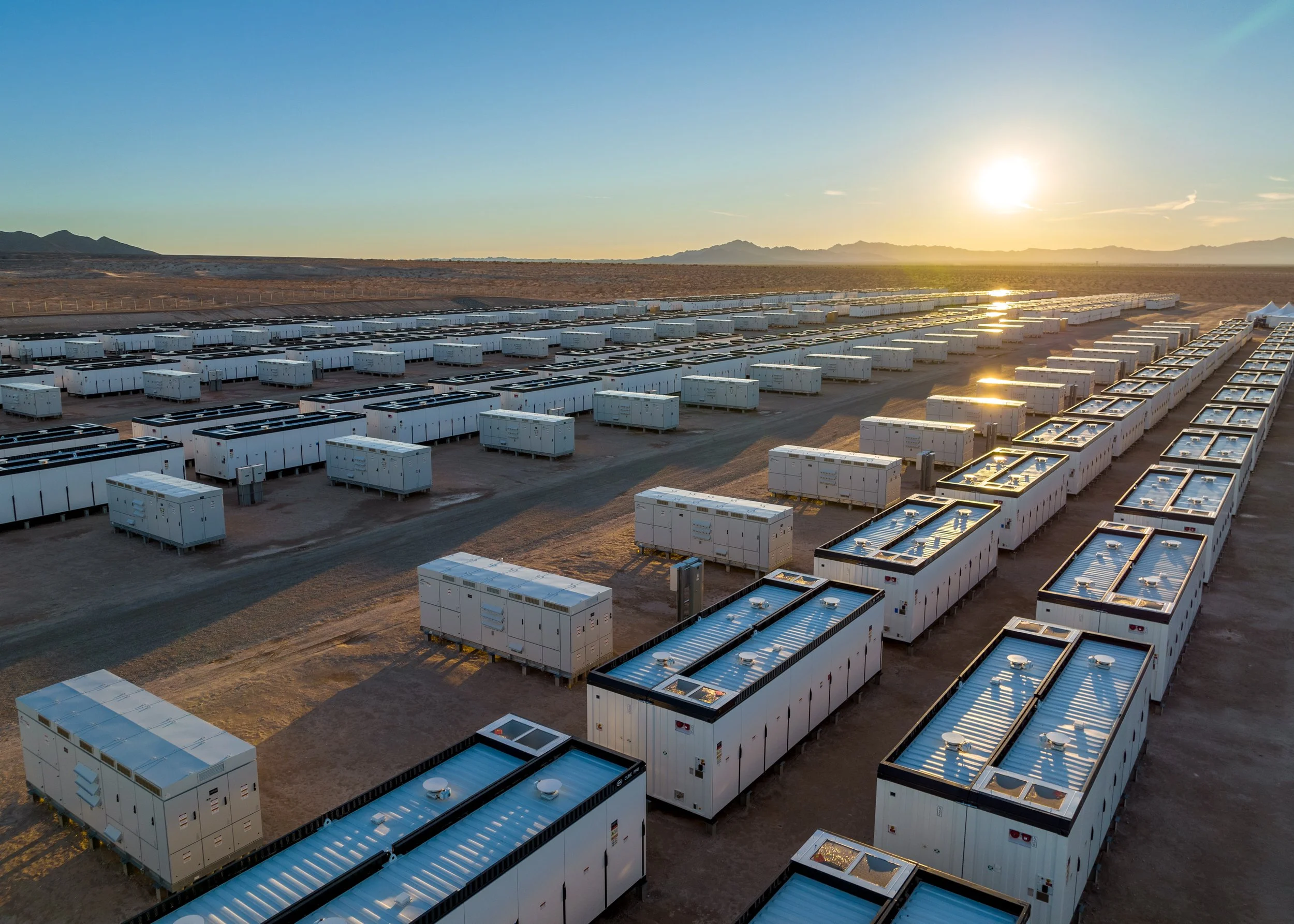
Battery energy storage system (BESS) projects for local communities are specialized facilities that capture and store electrical energy for later use. They act as a "buffer" for the local power grid, charging when electricity demand is low (or renewable generation is high) and discharging to supply the community during peak usage periods.
The Concern: Fire safety, toxic smoke plumes, and "stranded assets" (abandoned equipment).
Mitigations
-
Require the developer to post a cash or surety bond upfront (not paid over time) to cover 100% of removal and land restoration costs.
Model Precedent: Town of Rush, NY (Chapter 120-64) requires a bond equal to 125% of removal costs, adjusted for inflation every 5 years.
-
Don't rely on standard setbacks. Demand independent modeling of where toxic smoke would drift during a "worst-case" fire event to determine safe distances from homes and schools.
Model Standard: NFPA 855 (2023 Edition). Ask your county to adopt this specific fire code, which includes strict safety standards for lithium-ion batteries.
Public benefit options
-
Emergency Response Funding: Developer must fund specialized hazmat training and equipment (e.g., encapsulation foam, water tankers) for the local volunteer fire department.
Model Precedent: Town of Warwick, NY negotiated a host benefit agreement funding specific fire department upgrades.
-
Require the system to be capable of disconnecting from the main grid to power local critical infrastructure (water pumps, shelters) during a regional blackout.
Model Precedent: Montgomery County, MD (Public Safety & Shelter Microgrids)
This project is a leading example of how an islandable microgrid deal is structured to protect critical infrastructure without requiring taxpayer capital.
Solar Farms
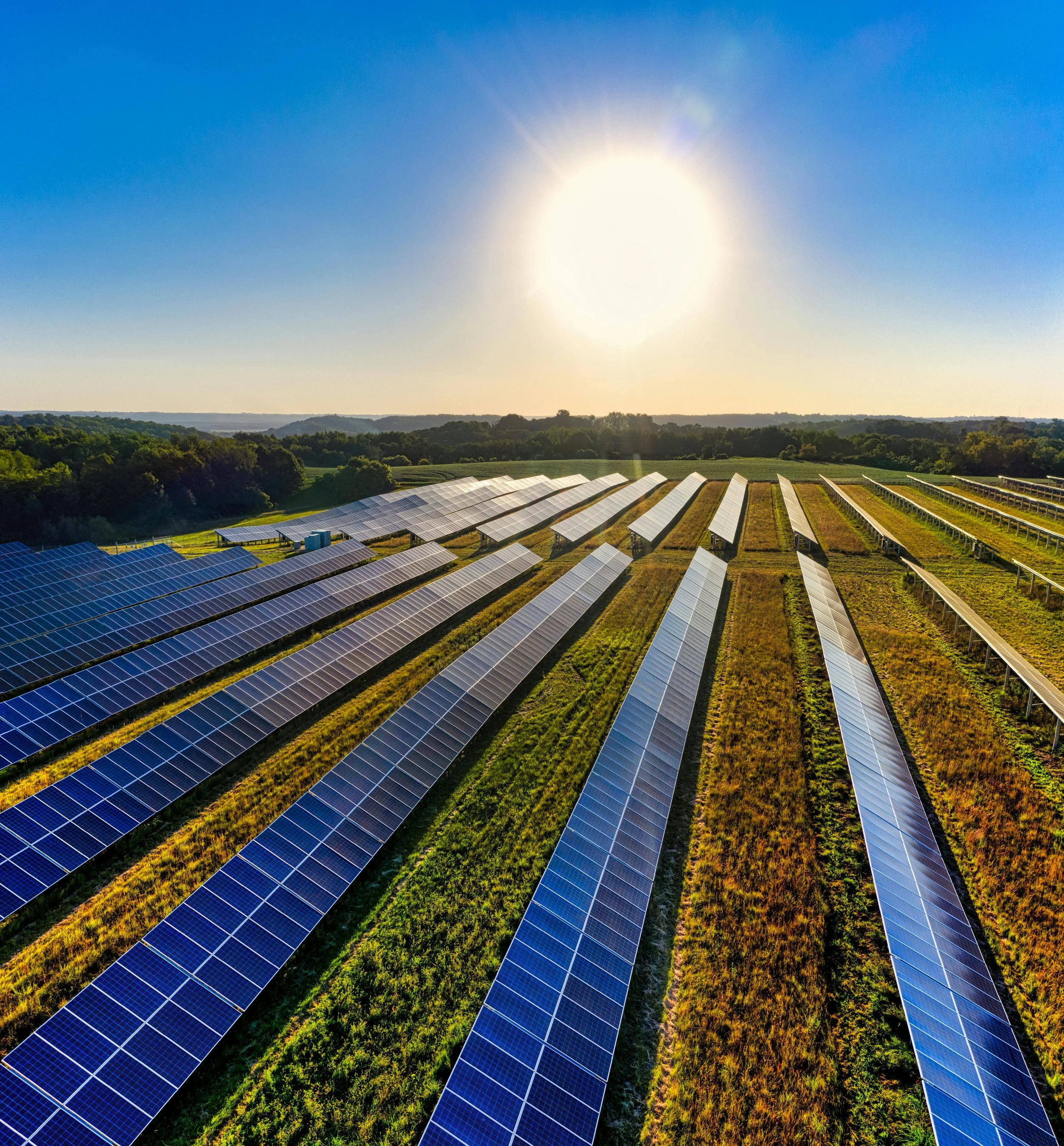
A solar farm, or photovoltaic (PV) power station, is a large-scale, ground-mounted system of interconnected solar panels that convert sunlight into electricity for the utility grid. Ranging from 1 to 100+ acres, these, often rural, installations typically use thousands of panels, sometimes with tracking systems, to supply renewable energy for wholesale or community consumption.
The Concern: Loss of prime farmland, visual blight, and wildlife disruption.
Mitigations
-
Require panel height and spacing that allows for agricultural activity (sheep grazing, shade-tolerant crops) underneath the array.
Model Precedent: New Jersey "Dual-Use Solar Act" (Chapter 170) allows solar on farmland only if agricultural production is maintained.
-
Fencing must be permeable (raised 6-8 inches) for small animals like badgers/foxes and include wide corridors for deer/elk migration.
Model Precedent: San Luis Obispo County, CA regularly conditions permits on wildlife-permeable fencing.
Public benefit options
-
Mandate native wildflower planting under panels instead of gravel or turf grass.
Model Precedent: Minnesota "Habitat Friendly Solar" Program sets a legal standard for what counts as pollinator-friendly.
-
A guaranteed percentage of power generated must be available for local residents to subscribe to at a locked-in, below-market rate.
Model Precedent: National Renewable Energy Laboratory’s Community Solar Program Design and Subscription Models
Wind Farms
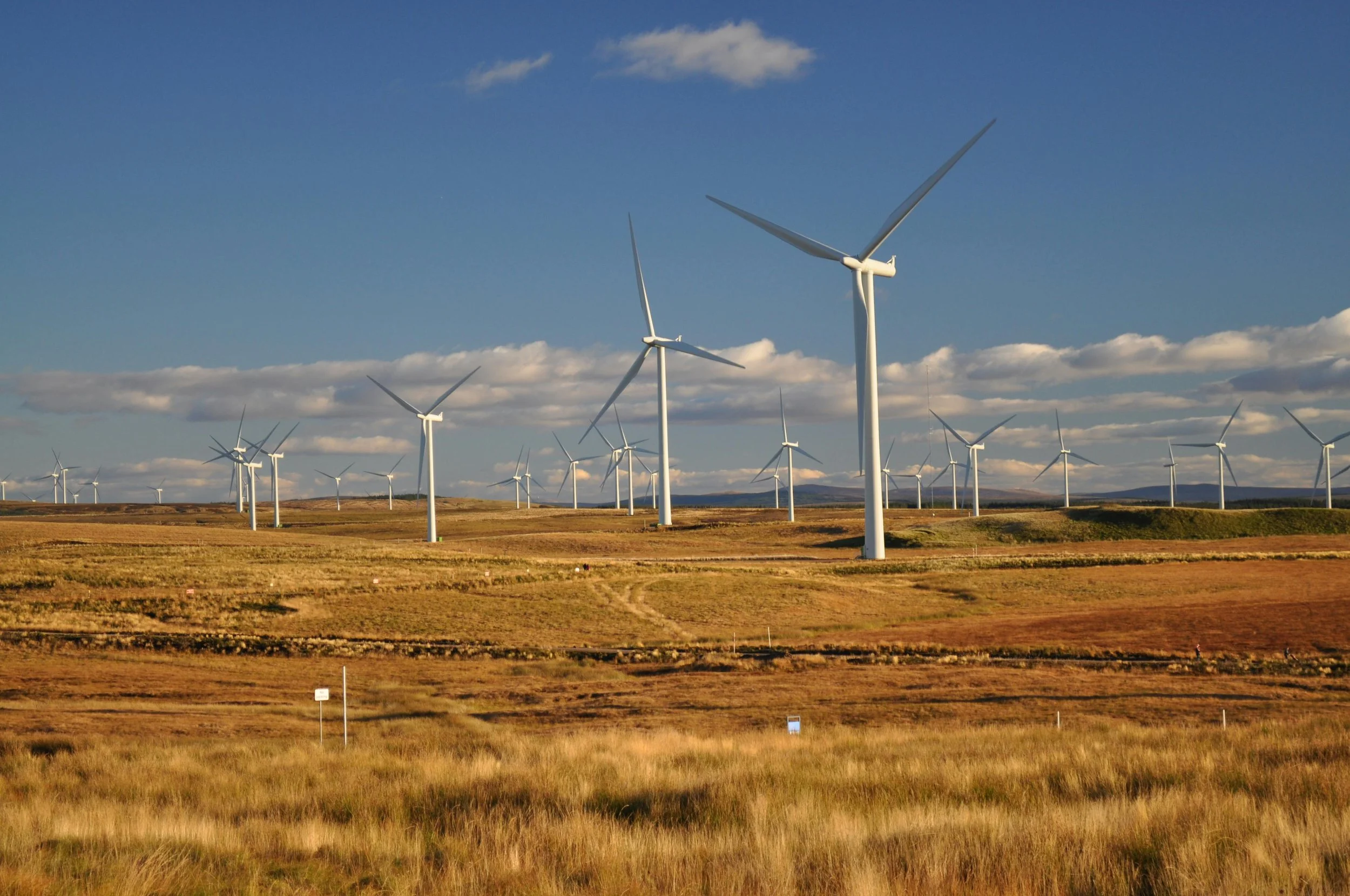
A wind farm is a cluster of wind turbines located in the same area that work together to generate electricity for homes and businesses. For small communities, these projects often serve as a "new cash crop," providing steady income for landowners and significant tax revenue for local services like schools and roads.
The Concern: Nighttime light pollution ("red blinking lights"), shadow flicker on homes, noise, and bird/bat strikes.
Mitigations
-
This technology keeps the red warning lights off by default, only turning them on when a plane is actually detected nearby.
Model Precedent:North Dakota (Senate Bill 2313) was the first state to mandate this technology to protect rural dark skies. This is now becoming industry standard.
-
Turbines can cast a strobing shadow on homes during sunrise/sunset. Some communities demand a "Smart Curtailment" system that automatically pauses the turbine if the shadow hits a home for more than 30 hours per year.
Model Standard: Shadow Flicker Ordinance (Common standard in Europe and increasingly in US zoning).
-
Turbine blades are massive and hard to recycle. The decommissioning bond must specifically cover off-site disposal so your local landfill isn't filled with fiberglass waste.
Model Precedent: Texas (HB 2845) requires wind lease agreements to include explicit removal and financial security terms.
Public benefit options
-
Wind components are incredibly heavy and will crush rural gravel roads. Many communities have required a binding RUA where the developer photographs all roads before construction and pays to rebuild them (often to a higher paved standard) after.
-
Some communities are exploring requirements for turbines to use AI-camera or acoustic systems that detect approaching eagles or bats and pause the blades instantly to prevent strikes.
Why it matters: This allows the project to exist without decimating local biodiversity.
Transmission lines
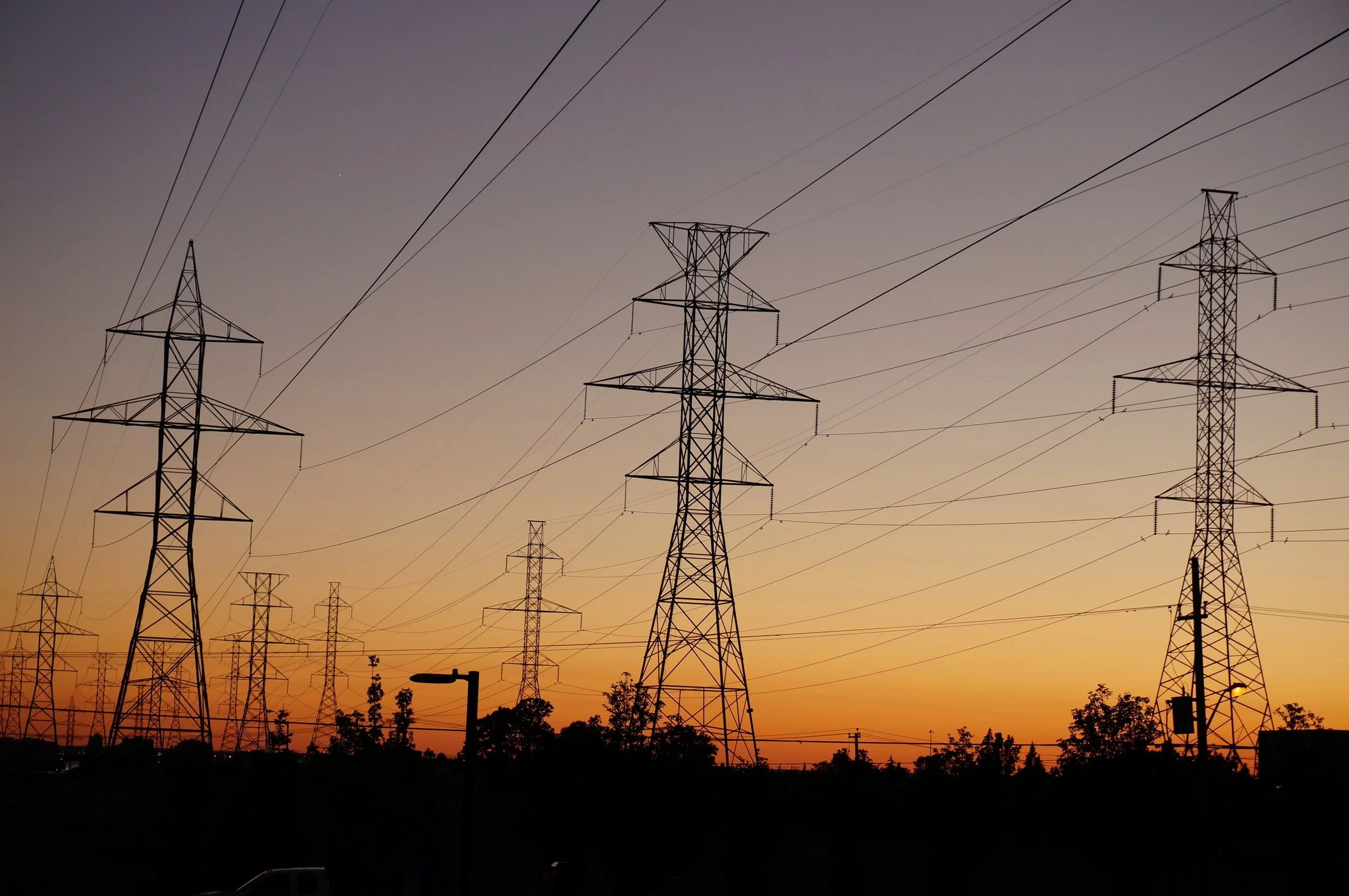
Transmission lines are the high-voltage "highways" of the electric grid, transporting large amounts of electricity over long distances from power plants to local, lower-voltage distribution systems. Essential for grid stability and connecting renewable energy sources, they typically use aluminum conductors supported by large steel towers, or are buried underground to deliver power reliably, reducing energy loss via heat.
The Concern: Wildfire ignition risk, environmental impact from cable trenching, visual impact on scenic areas from high tension lines.
Mitigations
-
Mandate steel poles (instead of wood) and "covered conductors" (insulated wires) in high-risk fire zones to prevent sparking.
-
Establish triggers (e.g., proximity to scenic views or historic sites) that force sections of the line underground.
Model Precedent: New York Public Service Commission has ordered developers to underground lines in visually sensitive areas like the Hudson Valley.
-
For river crossings, demand HDD instead of "open trenching" or "jet plowing." HDD drills a tunnel deep beneath the riverbed, leaving the sediment and aquatic habitat completely undisturbed.
Model Precedent: Block Island Wind Farm (RI) used Horizontal Directional Drilling for its landfall to avoid disturbing sensitive near-shore habitats.
-
Require cables to be buried at a specific depth (often 6-10 feet) or shielded to prevent electromagnetic fields from confusing migrating fish (salmon, lamprey, sturgeon) that rely on magnetic cues.
Model Precedent: The OSPAR Commission guidelines for submarine cables recommend burial as the primary mitigation for EMF effects on marine life.
-
If any in-water work occurs, mandate real-time "turbidity curtains" and sensors. If sediment plumes exceed a set threshold, work must stop immediately to prevent choking fish gills.
Public benefit options
-
Transmission lines carry a fiber optic cable on top for monitoring. Demand "dark fiber" strands in that cable be reserved for community broadband use.
Model Precedent: Western Area Power Administration (WAPA) leases excess fiber strands to rural ISPs to bridge the digital divide.
-
Demand the cable be "dual-use" by including Distributed Acoustic Sensing (DAS) and Distributed Temperature Sensing (DTS) technology.
Why it matters: This turns the fiber optic core into a massive sensor array that can monitor cable temperature, early detect “scour” or washing away of sediment keeping the cable buried, detect seismic activity (earthquake warnings), and even track whale/fish movements via acoustic vibrations.
Any project
Almost any “heavy infrastructure project,” has key mitigations and benefits that may apply.
This can count for other projects not specifically listed on this page like:
Pumped Storage Hydro
Industrial Greenhouses/CEA
Carbon Capture Pipelines
As well as any of the projects above.
Mitigations
-
Require the developer to pay into a fund that community groups can use to hire independent experts (hydrogeologists, fire safety engineers) to review the permit application.
Model: California Public Utilities Commission (Intervenor Compensation Program)
-
Counties have worked adopt the 2023 National Electrical Code (NEC). It contains much stricter safety requirements for solar and battery storage than older codes.
Public benefit options
-
If a project receives federal funding (IIJA/IRA), they are often required to have a "Community Benefits Plan." Use this federal requirement as leverage to force a binding local agreement.
Model: Department of Energy (DOE) funding requirements, as outlined in their Community Benefit FAQ.
what has worked before?
How have communities actually managed to get the above measures into projects so that, even if they progress against their wishes, key safety and benefit agreements are respected? Below are some evidence-based practices different towns and counties have used to reduce harm, and change the impact of a project.
Step 1: Find the Right Room (Map the Power)
Most neighbors go to the City Council for everything. But for a Rate Lock, the City Council often has no power. You need the utility provider.
The Task: Find out who provides your electricity. Is it an Investor-Owned Utility (like Pacific Power), a PUD (Public Utility District), or a Co-op?
The Action: Google "[Your County] Public Utility District Board Meetings."
The Goal: Find the date of the next board meeting. These are public, usually sleepy, and the commissioners are often your neighbors.
Step 2: Find Your "Statutory Friend" (The Bat Signal)
There are professionals whose entire job is to fight this battle for you, paid for by your taxes. You just need to alert them.
Every state has a "Ratepayer Advocate" or "Consumer Counsel" (in Oregon, it's the Citizens' Utility Board or CUB; in Washington, it's the Public Counsel Unit of the Attorney General's office).
The Action: Send an email to the state Ratepayer Advocate.
Subject: "Request for Scrutiny: Proposed Data Center in [Town Name]"
Body: "We are a group of residents in [Town] concerned that the proposed [Project] will spike our residential rates. We are requesting your office intervene to ensure a 'Cost of Service' study is done so residents don't subsidize this industrial load."
Why this works: These offices often want to intervene but don't know about every small-town project until a local tips them off.
Step 3: Ask the "Magic Question" (Don't Demand, Inquire)
You don't need to write the complex legal tariff. You just need to ask the question that forces them to do the math.
The Scenario: You are at the PUD Board meeting during "Public Comment." You have 3 minutes.
Example Script:
"Hi, I'm [Name]. I’m not an energy economist, but I know that data centers use massive amounts of power.
My question is: Has the PUD conducted an independent 'Cost of Service Analysis' for this specific project?
We want to ensure that if their high demand forces us to build a new substation or buy expensive power on the open market, they pay that premium, not us. Can you commit to establishing a separate rate class for this facility before any contract is signed?"
Step 4: The "Paper Trail" (Public Comment)
If the project is in the permitting phase (Zoning/Planning Commission), communities have found it effective to get their concern on the official record.
The Action: Submit a written comment to the Planning Department.
The "Magic Phrase": the phrase "Cumulative Impact" has helped to flag attention.
Example text: "The environmental review must study the cumulative impact of this data center's energy demand combined with other proposed projects in the region. Looking at this project in isolation is insufficient."
tl;dr - The action list:
1. If you are worried about your Electric Bill...
Who to contact: Your local PUD or Co-op Board (not the City Council).
What to ask: "Has a Cost of Service Study been done? We want a guaranteed Rate Lock so residents don't pay for the new substation."
2. If you are worried about Noise (The "Hum")...
Who to contact: The County Planning Commission.
What to ask: "We need a Low-Frequency Noise Study. Standard decibel readers don't catch the heavy bass 'hum' of cooling fans. Please measure at the property line, not just at our houses."
3. If you are worried about Water...
Who to contact: The State Department of Ecology or Water Resources.
What to ask: "We request a Hydrogeological Review. The developer must prove the aquifer recharges faster than they pump, even in drought years."
4. If you are worried about Fire & Safety...
Who to contact: Your local Fire District or Fire Marshal.
What to ask: "Does our volunteer department have the foam and training for a chemical fire? We want a Hazard Mitigation Plan funded by the developer before approval."
have other strategies or stories to share?
Please get in touch at our contact page.